Transportation & Logistics
Getting IBC totes to and from your facility reliably and affordably is just as important as the containers themselves. Our nationwide logistics network delivers single units to full truckloads, with optimized routing that keeps freight costs low and transit times short.
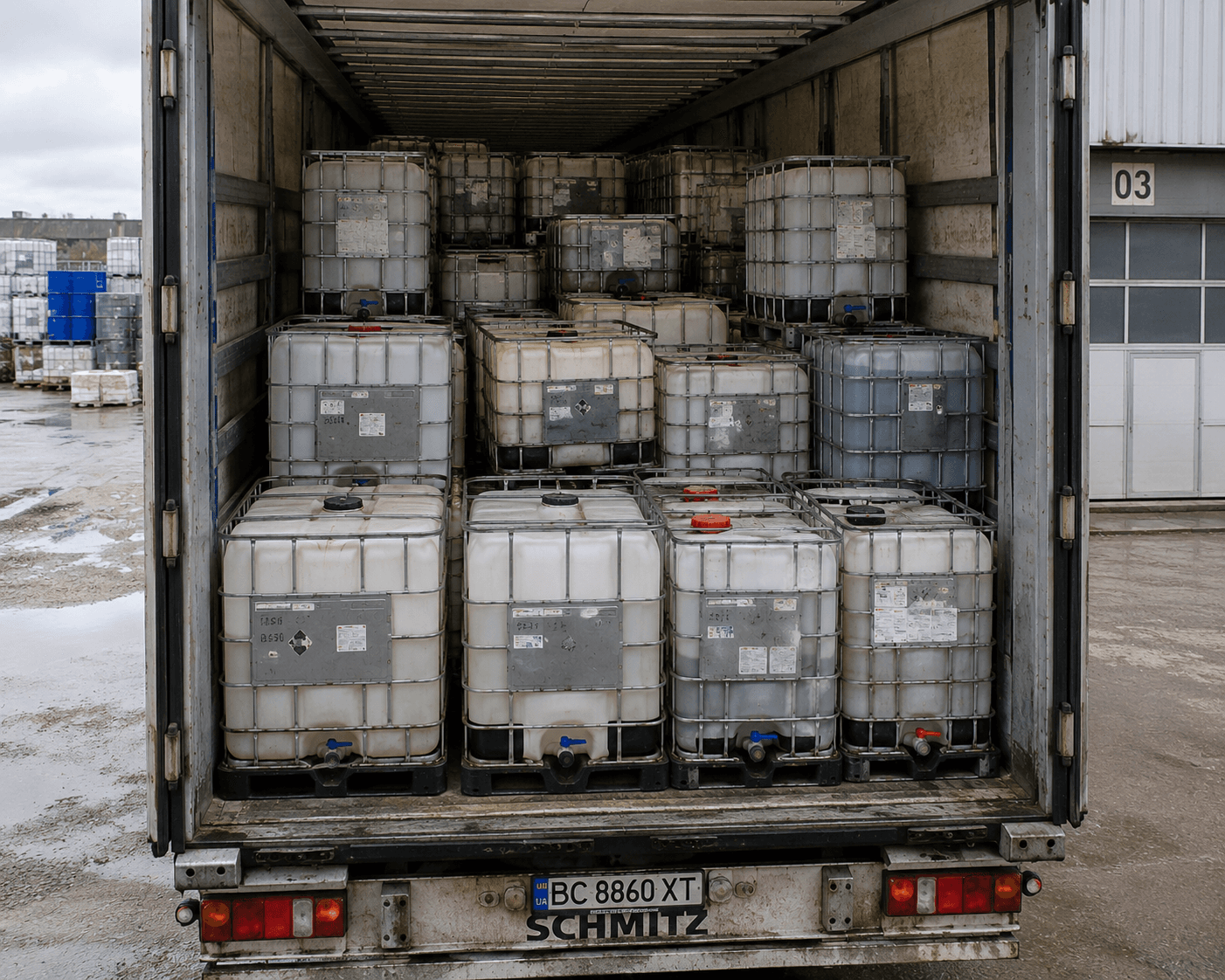
Nationwide Delivery Capabilities
Headquartered in Fort Wayne, Indiana, our central location gives us a logistical advantage for shipping to every corner of the continental United States. We maintain partnerships with regional and national carriers to ensure competitive rates regardless of destination.
Full Truckload (FTL)
The most cost-effective option for large orders. A standard 53-foot flatbed trailer holds 56-60 empty IBC totes stacked two-high. Full truckload shipments get the lowest per-unit freight rate and the most predictable delivery schedules.
Less Than Truckload (LTL)
For orders that do not fill a full trailer, we consolidate your shipment with other freight to reduce costs. LTL is ideal for orders of 5-30 totes, with competitive rates through our negotiated carrier partnerships.
Local Delivery
For customers within 150 miles of Fort Wayne, we offer direct delivery using our own fleet. This means no third-party carrier, more flexible scheduling, and the ability to accommodate same-day or next-day delivery on in-stock items.
Shipping Methods & Equipment
We match the right trailer type and loading method to your order size, destination, and container condition to ensure safe, efficient transport.
Flatbed Trailers
Our most common shipping method for IBC totes. Flatbed trailers allow easy side-loading with a forklift and accommodate stacked containers efficiently. Totes are secured with strapping and edge protectors to prevent shifting during transit.
Enclosed (Dry Van) Trailers
For customers who need weather protection or security during transit, enclosed trailers provide a fully sealed shipping environment. Ideal for shipping reconditioned food-grade totes or new containers that must arrive in pristine condition.
Step Deck Trailers
Step deck trailers offer additional height clearance for loads that need it. The lower deck height also makes loading easier for facilities without standard dock-height bays. We use step decks for oversized or non-standard IBC configurations.
Hotshot & Sprinter Delivery
For small orders (1-6 totes) or rush deliveries, we use smaller vehicles that can move faster and more flexibly than full-size trucks. Hotshot delivery is ideal for urgent replacement orders or sample shipments.
Stacking & Loading Specifications
Proper stacking and securing of IBC totes during transit is critical for preventing damage, maximizing load capacity, and maintaining safety. Our loading teams follow strict protocols based on container type and trailer configuration.
Empty Totes -- Standard Stacking
Empty IBC totes are stacked two high on flatbed trailers. The bottom row is placed directly on the trailer deck, and the top row nests into the cage frame of the lower totes. Each stack is strapped individually with ratchet straps rated for 5,000 lbs.
Filled Totes -- Single Layer Only
Filled or partially filled IBC totes must never be stacked during transport. Each tote sits directly on the trailer deck, secured with straps and chock blocks. Maximum fill weight is 2,800 lbs per tote including container weight.
Pallet Configuration
Standard IBC totes sit on a 48" x 40" pallet footprint. On a 53-foot flatbed, we fit 28-30 totes single-layer or 56-60 totes double-stacked (empty). Totes are oriented with the valve facing inward to prevent accidental damage.
Securing & Protection
All loads are secured with DOT-compliant strapping, edge protectors at contact points, and corner guards on end-row totes. Reconditioned and food-grade totes are additionally shrink-wrapped on pallets for contamination protection.
Load Capacity Quick Reference
Need Help with Load Planning?
Our logistics team can calculate the optimal trailer type, stacking configuration, and freight cost for your specific order. We will find the most cost-effective way to get your totes delivered safely.
Get a Freight Quote →Transit Times by Region
Estimated transit times from our Fort Wayne, Indiana hub. Actual delivery dates depend on order size, trailer availability, and carrier scheduling. Rush delivery is available for most destinations at an additional cost.
Great Lakes & Ohio Valley
IN, OH, MI, IL, WI, KY
Mid-Atlantic & Northeast
NY, PA, NJ, CT, MA, MD, VA
Southeast & Gulf Coast
GA, FL, AL, TN, SC, NC, TX, LA
Plains & Mountain
MN, IA, MO, CO, UT, MT, NE
Pacific Northwest
WA, OR, ID
California & Southwest
CA, AZ, NV, NM
New England
ME, VT, NH, RI
Alaska & Hawaii
AK, HI
Bulk Shipping Discounts
Shipping costs drop significantly as order volume increases. By consolidating your orders into full truckloads, you can reduce per-unit freight by 50% or more compared to LTL shipping. We also offer negotiated rate programs for businesses with recurring shipping needs.
Pickup Services
Selling IBC totes or sending them for recycling? We handle the pickup logistics at no cost for qualifying orders. Our drivers bring the equipment needed to safely load containers from your facility, whether you have dock access or need ground-level pickup.
Free Pickup for Sellers
When you sell IBC totes to us, pickup is free within the continental US for orders of 20 or more units. Smaller lots may incur a nominal pickup fee depending on location.
Recycling Pickup
We offer free recycling pickup for businesses with 50+ end-of-life totes. For smaller quantities, pickup fees are offset against any buyback value for containers that still have resale potential.
Scheduled Recurring Pickup
Set up automatic weekly, biweekly, or monthly pickups for businesses that generate a steady flow of used IBC totes. Our drivers know your facility and your schedule, minimizing disruption to your operations.
Equipment & Loading
Our trucks are equipped with forklifts or liftgates for facilities without dock access. Drivers are trained to handle IBC totes safely and can manage stacking, strapping, and manifesting on-site.
Route Optimization Methodology
Every shipment we arrange is run through our route optimization process to identify the most cost-effective and time-efficient delivery path. This is not generic freight brokerage -- we apply IBC-tote-specific logistics intelligence that accounts for load characteristics, stacking requirements, and regional carrier networks to consistently deliver lower freight costs than our clients can negotiate independently.
Consolidation Planning
We analyze all pending orders by destination region and departure date to identify consolidation opportunities. When multiple clients need shipments to the same geographic area within the same week, we combine loads onto a single truck, splitting the freight cost proportionally. Consolidation typically reduces per-unit freight by 20-40% compared to individual LTL shipments. Our logistics team maintains a rolling 7-day shipment calendar that visualizes all upcoming orders by destination, making it easy to spot consolidation windows.
Carrier Selection Algorithm
For every shipment, we request spot quotes from our network of 30+ carrier partners and compare them against our negotiated contract rates. Our selection process weighs price, transit time, carrier reliability score (based on historical on-time delivery data), equipment type availability, and insurance coverage. The result is a carrier recommendation that balances cost and reliability. We track carrier performance metrics on every load and remove consistently underperforming carriers from our preferred list.
Backhaul Utilization
Trucks that deliver IBC totes to your facility often need to return empty. We coordinate with our carrier network to find backhaul freight that brings our trucks back loaded, which reduces the effective cost of your outbound shipment. Similarly, when we pick up used totes from sellers, we try to schedule deliveries in the same region on the same route, turning a one-way trip into a profitable round trip. This backhaul optimization saves our clients an average of 15% on freight costs.
Carrier partners in our network
Average freight savings vs. direct carrier booking
On-time delivery rate across all shipments
Average freight quote turnaround time
Loading & Unloading Procedures
Proper handling during loading and unloading is critical for preventing container damage, ensuring driver safety, and maintaining compliance with DOT cargo securement regulations. Our drivers and loading crews follow standardized procedures that have been refined over thousands of shipments. Whether your facility has a full dock setup or requires ground-level access, we adapt our approach to work with your site conditions.
Loading Procedures
Pre-Load Inspection
Before loading begins, the driver inspects the trailer deck for debris, protruding fasteners, or damage that could harm containers during transit. The trailer is positioned, chocked, and secured to prevent movement during forklift operations. Landing gear is confirmed as fully lowered and locked.
Forklift Loading Protocol
IBC totes are loaded using a forklift with forks spread to the full width of the pallet base (48 inches). The forklift operator approaches each container squarely, lifts from the center of the pallet, and places the tote with the outlet valve facing inward (toward the center of the trailer) to protect it from edge contact and road debris. Each row is positioned flush against the previous row to eliminate shifting gaps.
Stacking Operations
For empty totes being stacked two-high, the lower row is fully loaded and strapped before the upper row is placed. Upper totes are centered on the lower cage frame, which is designed to support stacking loads. No more than two totes are stacked vertically on any trailer type. Filled totes are never stacked under any circumstances.
Cargo Securement
Each row of totes is secured with ratchet straps rated for minimum 5,000 lbs working load limit. Edge protectors are placed at every strap-to-container contact point to prevent strap cutting into the cage. Corner totes receive additional corner guards. All securement meets or exceeds FMCSA 49 CFR 393 cargo securement standards. The driver performs a final walk-around inspection before departure.
Unloading Procedures
Site Assessment
Upon arrival at the delivery site, the driver assesses the unloading area for adequate space, surface conditions, overhead clearance, and forklift access. If your facility has specific unloading procedures or safety protocols, our drivers follow your site rules. The driver confirms the receiving contact is present and ready before unloading begins.
Strap Removal Sequence
Straps are removed systematically from the rear of the load forward. Upper-tier totes are unloaded before lower-tier totes in each row. This prevents load shifting that can occur when lower containers are removed while upper containers are still in place. No personnel are permitted between the trailer and the unloading equipment during operations.
Placement & Staging
Totes are placed in the designated staging area per the receiving client instructions. Our drivers can place containers in rows, stacks, or individual positions as directed. For large deliveries, we coordinate placement order to match your inventory system or production line sequence.
Delivery Verification
After unloading, the driver and receiving contact conduct a joint count verification. Both parties sign the bill of lading confirming the quantity received, any damage noted, and the delivery time. A copy of the signed POD (proof of delivery) is provided to you and uploaded to our system within 24 hours of delivery.
Insurance & Liability Coverage
Every shipment we arrange is fully insured from pickup to delivery. We maintain comprehensive cargo and liability insurance that protects your containers throughout the transportation process. All carriers in our network are required to meet minimum insurance thresholds before they can be assigned loads.
Cargo Insurance
All shipments are covered by cargo insurance with a minimum coverage of $100,000 per load. This protects against loss or damage to your IBC totes during transit from any cause including accidents, fire, theft, and weather events. For high-value shipments or loads carrying filled containers, we can arrange supplemental coverage at your request. Claims are processed directly through our office -- you never have to negotiate with the carrier's insurance company.
General Liability
We carry $1 million in general commercial liability coverage that protects against property damage or bodily injury claims arising from our operations at your facility during pickup or delivery. This coverage applies to our drivers, equipment operators, and any subcontracted personnel working on our behalf. Certificates of insurance are available upon request and can be issued with your company named as additional insured.
Auto Liability
All vehicles in our fleet and our carrier partners' fleets maintain minimum $1 million in auto liability coverage as required by FMCSA regulations for interstate motor carriers. This covers third-party property damage and bodily injury claims resulting from vehicle accidents during transit. Our carrier vetting process verifies active insurance coverage before every load assignment.
Damage Claims Process
In the unlikely event that containers are damaged during transit, our claims process is straightforward: document the damage at time of delivery by noting it on the bill of lading and taking photos, then contact your account representative within 48 hours. We handle the entire claims process with the carrier and their insurance company on your behalf. Most claims are resolved within 10-15 business days, and we either replace damaged containers from our inventory or issue a credit for the affected units. You should never have to absorb a loss due to transit damage when shipping through IBC Totes USA.
Tracking & Notifications
Visibility into your shipment status is important for planning dock scheduling, coordinating receiving crews, and managing your production timeline. We provide proactive shipment notifications at every major milestone, so you always know where your containers are and when to expect them.
Order Confirmation
Within 4 hours of placing an order, you receive an email confirmation with your order details, quoted pricing, estimated ship date, and estimated delivery date. This confirmation includes your unique order number for tracking and reference.
Ship Notification
When your containers are loaded and the truck departs our facility (or the seller's facility for direct shipments), you receive a ship notification email with the carrier name, truck number, driver contact information, and estimated arrival time. For FTL shipments, this includes the bill of lading number for carrier tracking.
In-Transit Updates
For shipments with transit times exceeding 2 days, we provide daily position updates via email. These updates include the truck's approximate location, any delays or route changes, and an updated ETA. You can also request more frequent email updates on a schedule you define.
Delivery Notification
After delivery is completed, you receive a delivery confirmation email with the signed proof of delivery (POD), actual delivery time, and any notes from the driver regarding the delivery. This serves as your receipt confirming the transaction is complete.
Exception Alerts
If any issue arises during transit -- weather delay, mechanical breakdown, route change -- we proactively notify you before you have to ask. Exception alerts include the nature of the issue, the expected impact on delivery timing, and any actions we are taking to mitigate the delay.
Special Handling: Hazmat Containers
Transporting IBC totes that previously held hazardous materials requires additional compliance steps. Our hazmat transportation services ensure full regulatory compliance with DOT 49 CFR and EPA requirements.
Cross-Docking & Return Logistics
Beyond standard point-to-point delivery, we offer advanced logistics services that optimize your container supply chain. Our cross-docking capabilities and return logistics programs are designed for businesses that need sophisticated container flow management across multiple locations.
Cross-Docking Capabilities
Our Fort Wayne facility serves as a cross-docking hub where inbound shipments from multiple sources are received, sorted, and reorganized into outbound loads destined for different locations. This is particularly valuable for businesses that source IBC totes from multiple suppliers or need to redistribute containers across multiple facilities.
Multi-Source Consolidation
We receive containers from multiple sellers or suppliers, inspect and sort them at our facility, and consolidate them into single outbound shipments organized by grade, size, or custom configuration. This eliminates the need for your receiving facility to handle multiple inbound deliveries from different sources.
Break-Bulk Distribution
Large inbound loads can be broken down and redistributed to multiple destination facilities. A single truckload of 56 totes can be split across 3-4 regional warehouses based on each location's needs, with individual shipments dispatched on optimal routes.
Value-Added Processing
While containers are at our cross-dock facility, we can perform cleaning, component replacement, custom modifications, labeling, and quality inspection before forwarding them to their final destination. This eliminates the need for your facilities to handle any reconditioning work on-site.
Return Logistics Program
Our return logistics program creates a closed-loop container cycle: we deliver clean, ready-to-use totes to your facility and pick up empty or used containers on the same trip or on a scheduled return route. This circular approach eliminates one-way shipping waste and reduces your total logistics cost by up to 40% compared to managing deliveries and pickups as separate transactions.
Delivery-and-Pickup Routes
Outbound deliveries of clean or new containers are paired with return pickups of used containers from the same facility or nearby locations. Drivers carry both empty and loaded totes in the same trip, maximizing trailer utilization and minimizing per-unit transport costs.
Scheduled Return Cycles
For businesses with predictable container turnover, we establish recurring return pickup schedules that align with your production cycles. Empty containers are collected on a fixed cadence -- weekly, biweekly, or monthly -- and routed back to our facility for cleaning, reconditioning, or recycling.
Container Tracking & Accountability
Each container in the return program is tracked by its unique ID number. We maintain a real-time inventory of containers deployed at your facilities and containers returned for processing. Monthly reports show your container utilization rate, average cycle time, and fleet health status, helping you optimize your container inventory levels.
Our transportation and logistics services integrate seamlessly with our other offerings. Explore our related services:
Get a Freight Quote Today
Tell us your quantity, location, and timeline, and we will find the most cost-effective way to get your IBC totes delivered. Most quotes are returned within 2 hours during business hours.